A quiet room where your book is drawn out of you.
01
The Interview
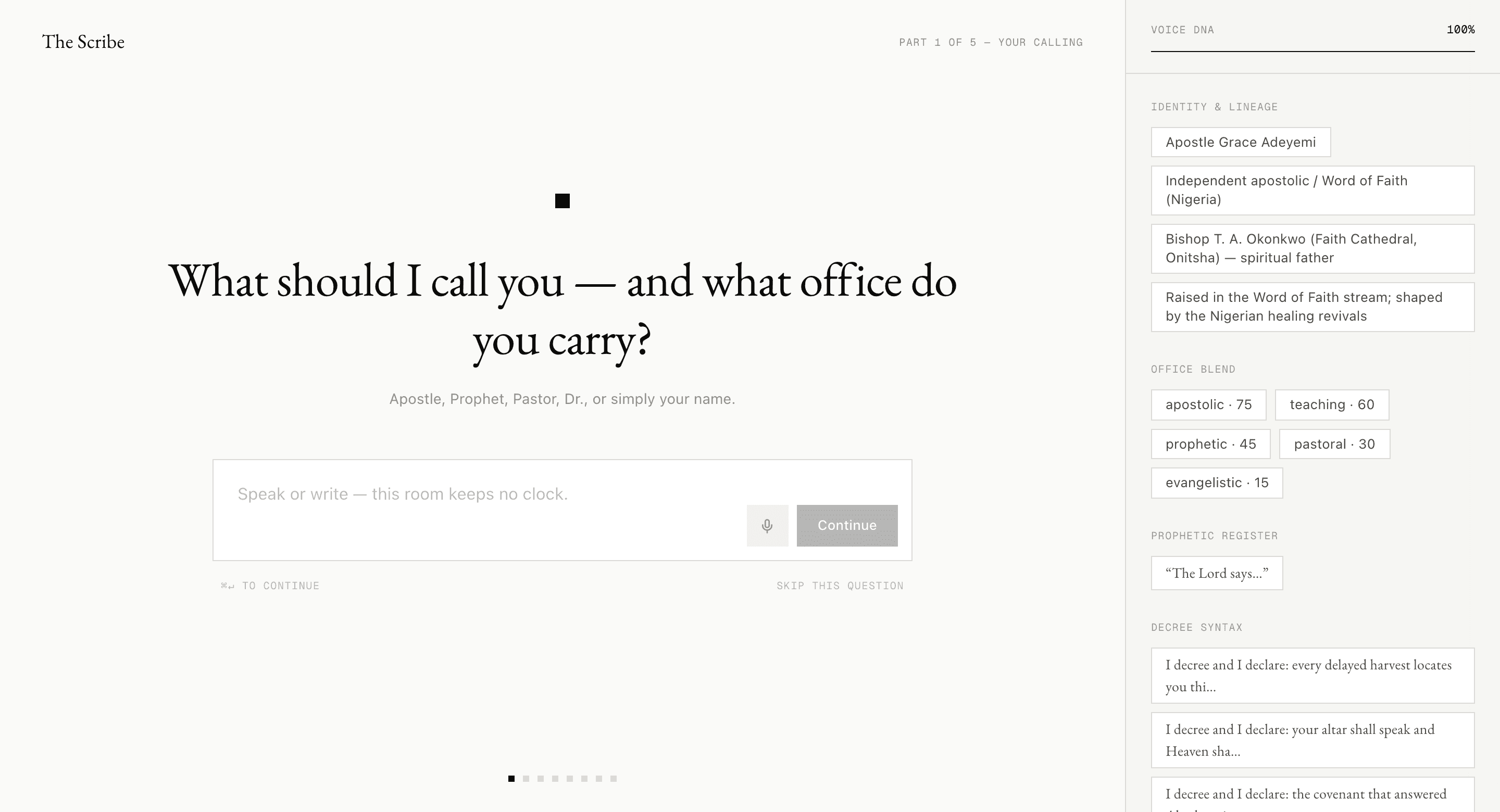
It begins with conversation. The Scribe asks what a biographer would ask — and listens like a congregation does.
02
The Voice DNA
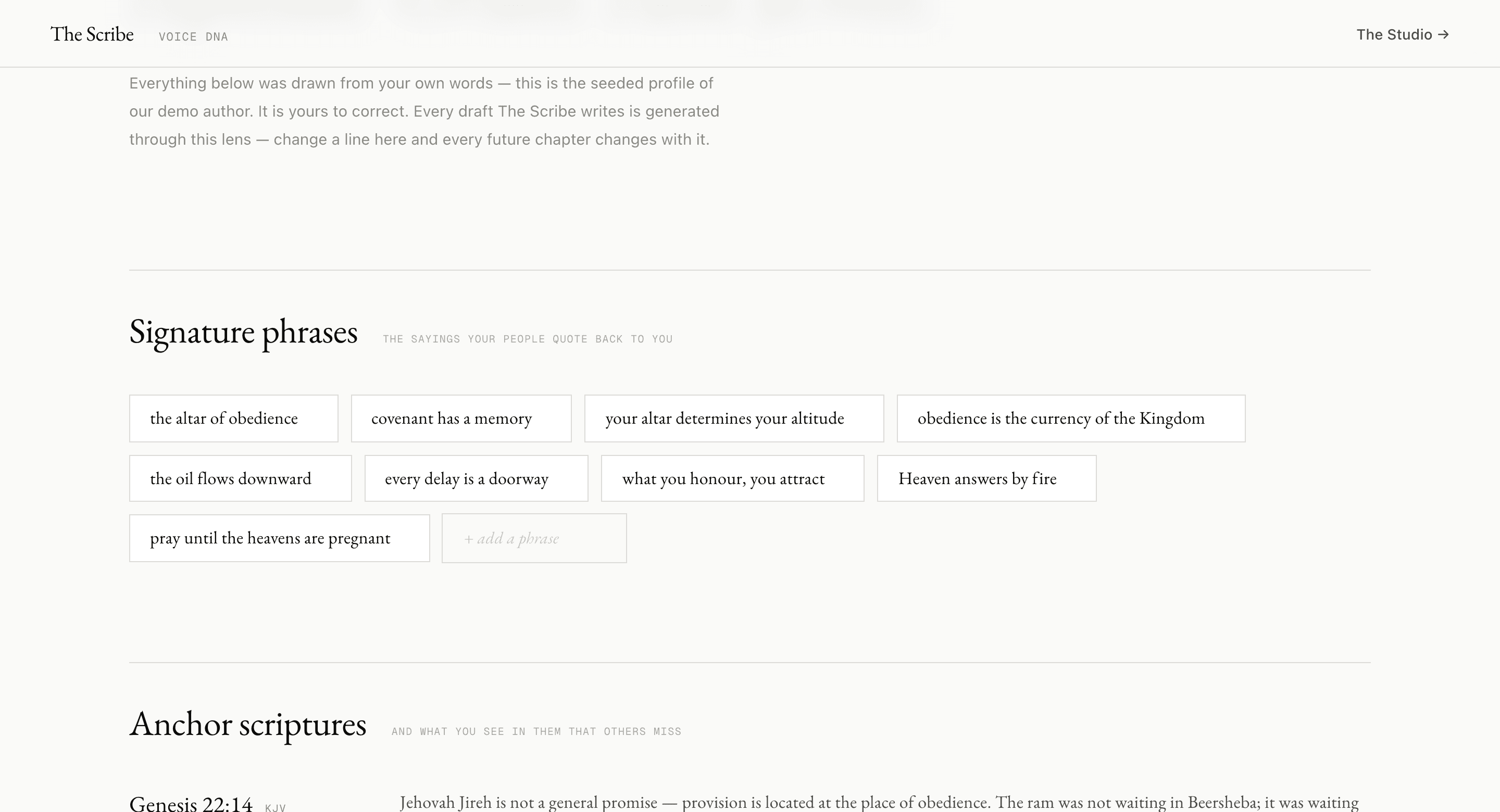
Every answer trains a living profile: your cadence, your anchor scriptures, the phrases your people quote back to you.
03
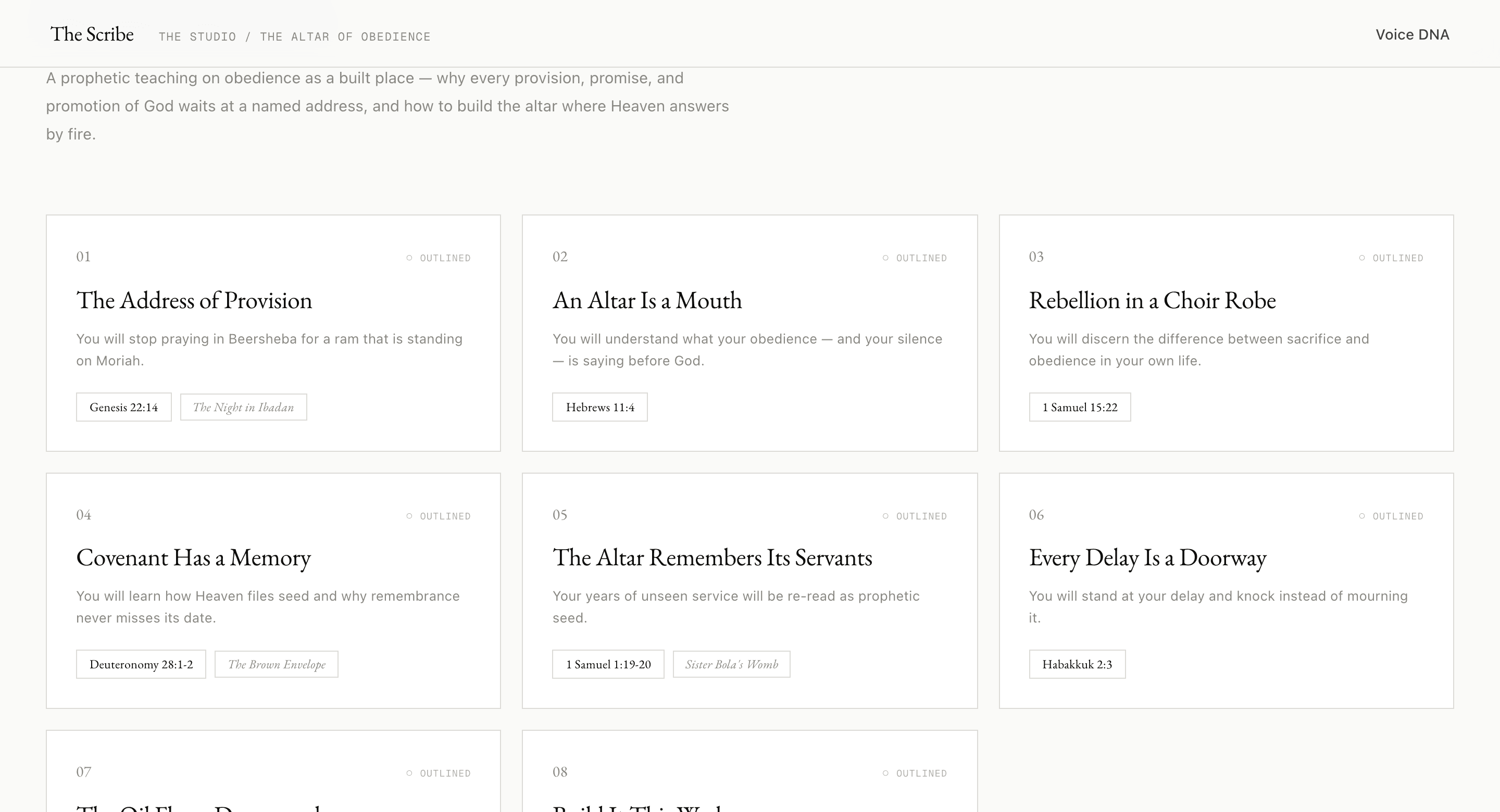
The Manuscript
Chapters arrive in your voice, every paragraph traceable to your own words. You edit on paper; the Scribe keeps the margins.
We don’t imitate you. We learn you.
Cadence. Diction. Conviction. A ten-minute interview becomes a living profile — and every chapter is generated through it, never around it. Correct one line and every future draft obeys.
“Beloved, hear me: obedience is the currency of the Kingdom. Abraham did not understand Moriah. He climbed it.”
Sample sentence · rendered in the author’s measured style
Three rooms. One book.
“It’s the first draft that didn’t need me to fix the voice.”
The Scribe never writes from a generic model of 'Christian author.' Every draft is generated through your Voice DNA — your interview answers, your signature phrases, your anchor scriptures and what you see in them — and every paragraph can show you the source it came from. If a line doesn't sound like you, you correct the profile once and every future draft obeys.
Ghostwriting is as old as scripture itself — Tertius penned Romans, Baruch wrote for Jeremiah, and most ministry books on shelves today were shaped by an uncredited collaborator. The Scribe is more conservative than the industry it replaces: it cannot invent a testimony, cannot import theology you don't carry, and shows you the provenance of every line. The words begin and end with you.
Seven questions, about ten minutes, answered out loud or in writing — your calling, your testimony, the verse your ministry stands on, the way you decree. The Scribe asks follow-ups the way a good interviewer would, and you watch your Voice DNA assemble as you speak.
You do. Entirely. Your interview, your profile, your drafts — exportable to .docx at any moment, deletable at any moment.
Minutes after your outline is set. A full chapter — three to four thousand words, in your voice, with your chapter-end apparatus — streams onto the page in front of you.
Your book is already in you. Begin.